Diphenhydramine (also known as Benadryl®) is a medicine used to treat allergic reactions, hives and allergies that affect the nose (called nasal allergies).
It is an "over-the-counter" medicine, meaning that you can get it without a doctor's prescription. There are other medicines like diphenhydramine that might be safer for young children.
The table* below can help you figure out the right amount of diphenhydramine to give. Use your child's weight to decide on the right amount. You can find the weight in the top row of the chart.
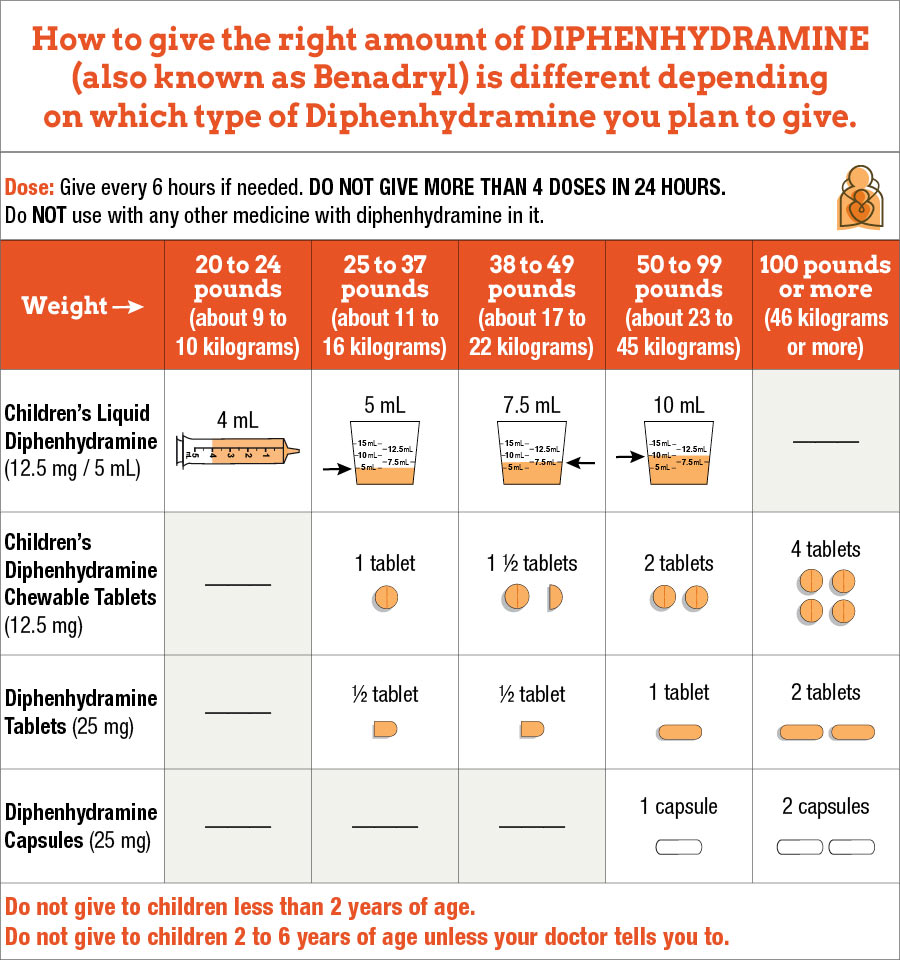
*Table notes:
- Age of child: Do not give diphenhydramine to children less than 6 years of age unless your child's doctor tells you to. There are other medicines that are like diphenhydramine but will not make your child sleepy (like loratadine, cetirizine, fexofenadine) that can be bought without a prescription and are safer for young children.
- Measuring the dose for liquid medicines (should be in "mL" or metric units): It is easier to give the right amount of medicine when using a syringe than when using a kitchen teaspoon or tablespoon. Use the tool that comes with the medicine. If a tool does not come with the medicine, ask your pharmacist for one.
- How often to give the medicine (frequency): You can give diphenhydramine every 6 hours as needed.
- Adult dose: 50 mg
- Side effects: This medicine can make a child sleepy. Some children, however, may get more excited and active instead of getting sleepy. Because this medicine can make people sleepy, it is important to be careful when driving or using heavy machines after taking this medicine. This is especially important for teens who are driving.
More information