All medications have the potential to cause secondary, unwanted and/or adverse effects.
Adverse Effects:
Adverse effects are any undesirable experience associated with the use of a medical product in a patient. Medication side effects can include:
The effects of medication can vary from child to child.
For example, the same antihistamine can make one child sleepy while another becomes jittery and hyperactive.
The side effects of one type of medication can be different from the side effects for another medication.
A fast heart rate, for instance, is expected for albuterol, an asthma medication, but not for an antibiotic. Antibiotics often cause diarrhea or loose stools, but would not be expected for asthma medications like albuterol.
Allergic Reactions:
Allergic reactions may involve many different types of symptoms such as:
Swelling
Rash
Difficulty breathing
Allergic reactions are difficult to predict and range from mild (redness of skin, itching) to severe (life threatening). Skin disturbances are the most common.
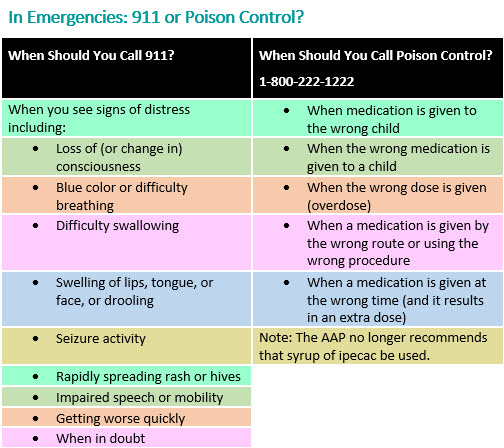
In an Emergency: When to Call 911 vs. Poison Control
Additional Information from HealthyChildren.org: