By: Rebekah Fenton, MD, FAAP
Starting at around age 7 to 18 years, kids and teens need a number of important vaccines to protect them.
The vaccines that are recommended for them help prevent major health problems—including infertility, muscle paralysis, brain damage, blindness, deafness and cancer.
View the AAP recommended vaccines for adolescents here. Twelve national organizations representing more than 1 million clinicians, physicians, pharmacists and other pediatric health care professionals agree with the AAP immunization schedule.
The AAP recommendations are based on ongoing review of the most recent scientific data for each vaccine. To be included in the schedule, the vaccines must be licensed by the Food and Drug Administration.
When vaccines work best & are needed most
The AAP recommends these vaccines at specific ages. Why? There are two main reasons:
Is your preteen or teen behind on some of their immunizations? It is important for them to see their pediatrician and make sure they are fully protected. Vaccines keep others safe, too. That's why children and teens in the United States get them to keep them and their school community healthier.
What to know about the vaccines recommended for preteens, teens & young adults, and the diseases they prevent
Meningococcal: At age 11 or 12, your teen should get their first dose of meningococcal vaccine. The vaccines protect against up to 5 bacterial strains, which are labeled with the letters A, B, C, W and Y.
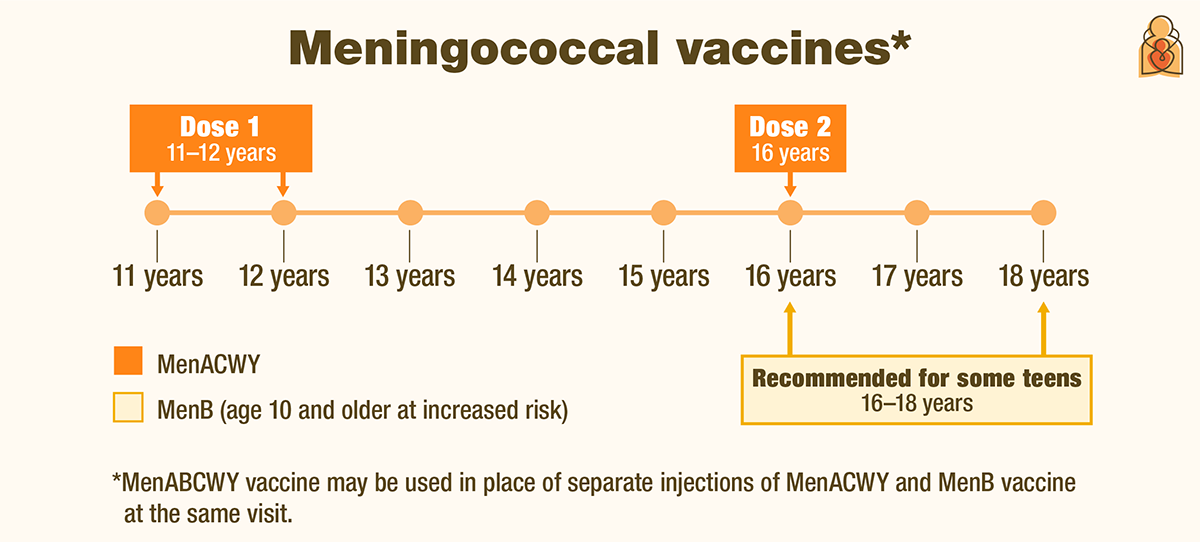
Meningococcal ACWY (MenACWY) vaccine protects against 4 bacterial strains, which are labeled with the letters A, C, W and Y.
Meningococcal B (MenB) vaccine is another type of meningococcal vaccine. It protects against a different strain of the bacteria. MenB vaccine is recommended for kids who have certain chronic health conditions that make them more vulnerable or anyone age 16-18 years who decided with their pediatrician to get the vaccine.
Meningococcal ABCWY (MenABCWY) combines protection from MenACWY and MenB into one shot. If available, it can be used in place of separate injections of MenACWY and MenB if both vaccines are recommended at the same visit for kids age 10 years or older.
Meningococcal: a fast-acting disease
Meningococcal vaccines protect older kids from meningococcal disease. The disease is life-threatening if it's not caught and treated early—within a few hours. The disease is caused by bacteria that can infect the bloodstream, brain and spinal cord. Anyone can get meningococcal disease, but young between 16 and 20 years old are among age groups most at risk. Infections are spread in saliva through close contact like coughing or kissing and lengthy contact, such as in crowded spaces like college dorms, military barracks and child care centers.
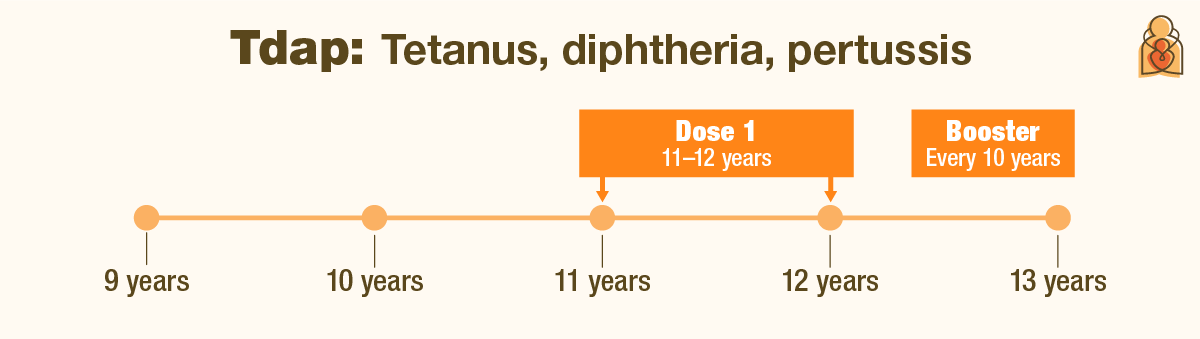
Tetanus, diphtheria and pertussis booster: At age 11 or 12, we give a vaccine called Tdap. This vaccine is a booster to protect against three diseases: tetanus, diphtheria and pertussis (whooping cough). It's a slightly different version of a vaccine your child received as a baby (DTaP). The version for adolescents and adults has a different name because it has lower doses of the diphtheria and pertussis vaccines. (It has the same amount of tetanus vaccine, though.) After your child gets Tdap vaccine at age 11 or 12, they will need a booster dose of Tdap or tetanus and diphtheria (Td) vaccine every 10 years as an adult as well.
Tetanus is caused by bacteria that naturally live in the soil or dust. You can be exposed to the bacteria through any break in your skin, like a cut or puncture wound. Tetanus produces a toxin that causes painful muscle contractions. Another name for tetanus is lockjaw, because it often causes a person's neck and jaw muscles to lock making it hard to open the mouth or swallow. We will never eliminate this bacterium from our world, so the vaccine is the best way to prevent tetanus.
Diphtheria is a disease that causes a serious throat infection, breathing problems and heart failure. Before we had a vaccine, diphtheria killed 1 out of every 5 kids who were infected. The vaccine is a lifesaver.
Pertussis (whooping cough) can cause a cough that won't go away, and sometimes causes vomiting or trouble breathing. The protection your teen got from their childhood vaccine starts to wear off around age 11. That is why a booster is so important. Teens can easily spread the disease to others, including infants, who are at even more risk.
Human papillomavirus (HPV): The HPV vaccine prevents
six types of cancer. Vaccinating kids against HPV when they are ages 9-12 years will allow them to build strong immunity against the virus before they are exposed to it. If they don't get the first dose until age 15, they need 3 doses.
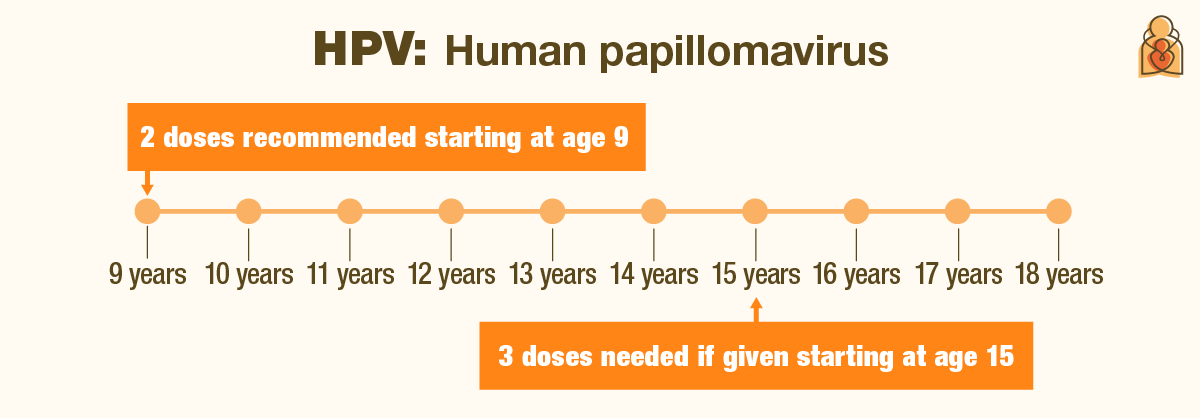
HPV causes cervical cancer, penile and anal cancers, cancers of the mouth and throat, and genital warts. The
HPV vaccine works really well to protect against strains of the virus that cause more than 90% of these cancers.
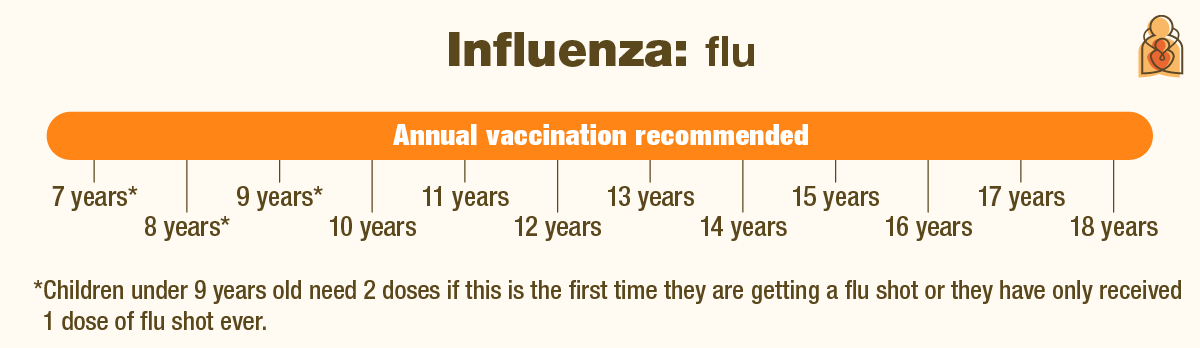
Influenza (flu): The AAP recommends the
flu shot for everyone age 6 months and older, including teens, every year. The flu is unpredictable. There is no way to know if your teen will have mild flu illness and miss just a few days of school or if they will get seriously ill and need hospital care. The flu shot is very effective at preventing severe influenza disease that leads to hospitalization.
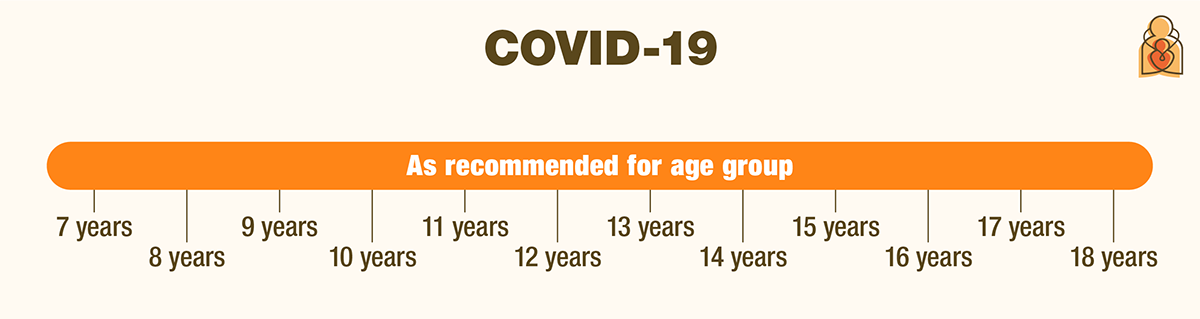
COVID-19: The AAP recommends the COVID
vaccine for children and teens with risk factors for COVID. Any child or teen without
risk factors can get the COVID vaccine, too. Vaccination is the best way to
protect teens from long-term problems if they get sick with COVID. Learn
more here.
Behind on other vaccines?
Now is the time to catch up on recommended immunizations that your teen may have missed. That includes hepatitis A, hepatitis B, polio, the measles-mumps-rubella (MMR) vaccine and the chickenpox (varicella) vaccine. Most all vaccines can be given at the same time as other vaccines.
Heading off to college? Some colleges and universities require students to be vaccinated. Check these requirements now, so your teen can be caught up before they go.
Remember
These recommended vaccines are the best way to protect older children and teens and keep others safe, too. Many of them can literally save your teen's life! Sure, getting a shot may pinch for a moment—but the protection from serious disease lasts a very long time.
More information
About Dr. Fenton
 Rebekah Fenton, MD, MPH, FAAP, is a general pediatrician and adolescent medicine specialist who lives and practices in Chicago. She is an emerging leader in health-equity focused medicine through her passionate care for marginalized youth, speaking and writing-based advocacy, and innovative leadership. Rebekah Fenton, MD, MPH, FAAP, is a general pediatrician and adolescent medicine specialist who lives and practices in Chicago. She is an emerging leader in health-equity focused medicine through her passionate care for marginalized youth, speaking and writing-based advocacy, and innovative leadership.
|