By: Ingrid Polcari, MD, FAAP & Matthew Mahoney, DO
Impetigo is a common skin infection caused by bacteria. It is most often seen in children between 2 and 5 years old, but anyone can get it.
What causes impetigo?
Impetigo starts when there is a break in the skin. This can be from an insect bite, cut, or skin damage from another condition like
eczema. The break in the skin acts like an open door, allowing bacteria to move in and cause an infection.
The most common bacteria that causes impetigo is a type of "staph" bacteria called Staphylococcus aureus.
Is impetigo contagious?
Impetigo is highly contagious. This means it is particularly good at spreading from person to person. There are more cases seen during warm weather, when cuts and scrapes from outdoor play are more likely.
What are the signs and symptoms of impetigo?
Impetigo can be mostly crusty or have blisters:
Crusted impetigo: This is the most common type of impetigo and starts as tiny blisters (small bubbles filled with fluid) that burst and leave red oozing patches that dry into yellow or honey-colored crusts and scabs.
Bullous impetigo: The word "bullous" refers to the large blisters that form. It usually starts with large bubbles filled with clear fluid that may burst open, leaving moist red sores and then dry crusts.
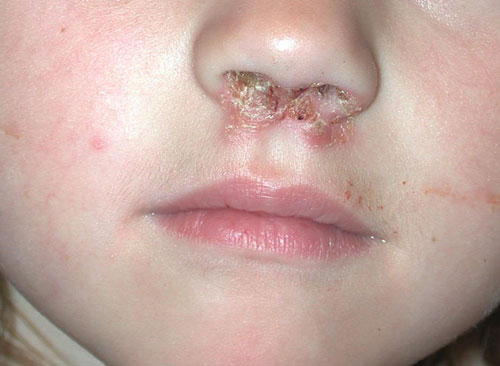
What parts of the body can be affected by impetigo?
Impetigo can develop anywhere on the body. It is especially common on the face, including around the nose, mouth and ears. It is also frequently seen on the arms and legs. Less commonly, impetigo can develop in the
diaper area.
How is impetigo diagnosed?
Most of the time, your child's doctor can diagnose impetigo just by looking at the rash. In some cases, a sample may be collected from the rash and sent to the lab to see if bacteria can be grown. This can help confirm the diagnosis but is not always necessary.
How is impetigo treated?
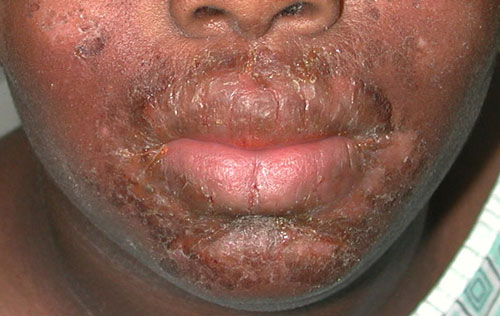
Impetigo needs to be treated with antibiotics. There are two forms of antibiotics that help: topical (put on top of the affected skin) and oral (taken by mouth).
Topical antibiotics are used for less severe cases or if there is only a small area of skin affected, while oral antibiotics are used for cases where a large area is affected. Once an antibiotic is started, healing should start within a few days. It's important to complete the full course of antibiotics, even if the infection looks like it is improving before the end.
While the infected area is healing, it should be cleaned with soap and water every day to gently remove the yellow crusts and scabs. The open sores should be covered loosely with a bandage to prevent spreading the infection to other people.
How to avoid spreading impetigo
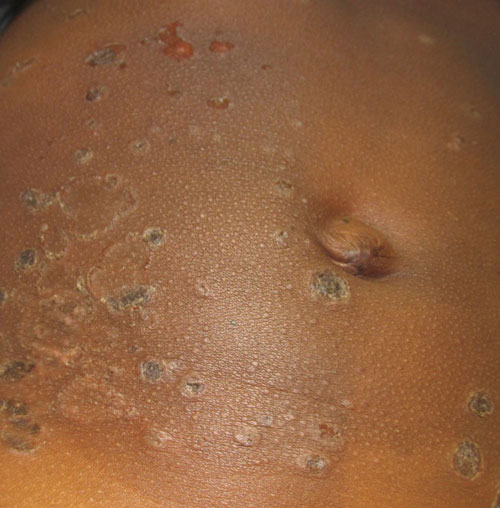
Since impetigo is very contagious, your child should avoid close contact with other children until the rash is clear or improving after two days of antibiotics.
If you come in contact with the rash, be sure to wash your hands and the exposed skin thoroughly with soap and water. Also, keep your child's washcloths and towels separate from those of other family members.
How can you prevent impetigo infection?
Since the bacteria that causes impetigo enters through breaks in the skin, the best way to avoid this infection is to prevent breaks in the skin.
If a break in the skin does develop, cleanse it with soap and water and apply an antibiotic cream or ointment until it heals. Encourage your child not to pick at sores or scabs to avoid letting in the bacteria. Be careful not to use washcloths or towels that have been used by someone else who has an active skin infection.
More information
Impetigo images from top to bottom: axillary impetigo (on armpit); perinasal impetigo (around nose); perioral impetigo (around mouth) and impetigo on torso. Images courtesy Sarah Stein, MD, FAAP. About Dr. Polcari
 Ingrid Polcari, MD, FAAP is an Associate Professor of Dermatology and Pediatrics at the University of Minnesota. She is the Program Director of the Dermatology Residency Program at the University of Minnesota and has a special interest in resident education. She is a member of the American Academy of Pediatrics Section on Dermatology Education Committee. Ingrid Polcari, MD, FAAP is an Associate Professor of Dermatology and Pediatrics at the University of Minnesota. She is the Program Director of the Dermatology Residency Program at the University of Minnesota and has a special interest in resident education. She is a member of the American Academy of Pediatrics Section on Dermatology Education Committee.
|
About Dr. Mahoney
 Matthew Mahoney, DO is a pediatric resident physician at the University of Minnesota and M Health Fairview Masonic Children's Hospital. He has a special interest in pediatric dermatology and is a member of the American Academy of Pediatrics Section on Dermatology Education Committee. Matthew Mahoney, DO is a pediatric resident physician at the University of Minnesota and M Health Fairview Masonic Children's Hospital. He has a special interest in pediatric dermatology and is a member of the American Academy of Pediatrics Section on Dermatology Education Committee.
|