By: Kathi J. Kemper, MD, MPH, FAAP
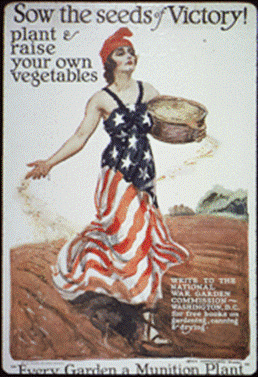
Did you know that more than 100 years ago, "victory gardens" became a national movement? During World War I, food production fell as farm laborers moved to military service. The U.S. victory gardening campaign successfully started over 5 million gardens and produced produce worth more than $1.2 billion.
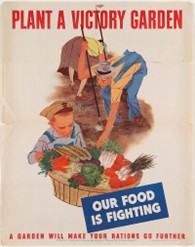
During World War II, the first lady, Eleanor Roosevelt, planted a victory garden at the White House lawn. By the end of the war, 40% of the fruits and vegetables raised in the U.S. came from victory gardens planted in personal yards, church grounds, school yards and other public places.
Today, victory gardens are
making a comeback as a simple but powerful tool to combat climate change, support food security, save money and improve children's physical and mental health.
How can victory gardens help combat climate change?
Victory gardens can help combat climate change 3 ways:
1. Gardens remove carbon dioxide, a major greenhouse gas, from the air. Plants take carbon dioxide, combine it with water, and turn it into food for the plants (and for us!); when the plant dies, its carbon is stored in the soil. This is known as "carbon sequestration," and plants, especially perennial plants like fruit trees, are really good at it.
2. Growing food locally dramatically decreases the distance fruits and vegetables travel to get to your plate, reducing reliance on fossil fuels to transport food. This reduces reliance on fossil fuel-powered transportation (and increases the freshness, flavor and nutritional value of the food).
Fun fact: Produce from the local grocery store travels an average of 1,500 miles from the farm to the store!
3. Compost. Good gardeners pile their grass clippings, leaves, garden soil and kitchen scraps into compost piles, water them and mix them regularly with a rake or pitchfork. Soil organisms turn this "waste" into gardener's gold: compost.
Compost is a great, natural fertilizer. Composting decreases the need for chemical fertilizers, which are made from fossil fuels. Composting also keeps organic waste out of landfills where it is likely to produce methane. Methane is a greenhouse gas about 30 times more powerful than carbon dioxide in trapping heat in our atmosphere.
Here's a bonus benefit: less plastic. When you bring your produce in from the garden, you don't need to wrap it in single use plastic like it's found in the grocery store.
So, gardening is a simple but powerful activity to combat climate change. But that's not all!
Gardens support food security
As the climate heats up, so do threats to agriculture—like heavy spring rains that delay planting big fields in the Midwest, droughts that kill crops and reduce productivity in the West, rising sea levels that flood fields or contaminate ground water with salt or pollutants in coastal areas and damaging storms that threaten harvests. Growing at least some of your own food gives you a buffer against bad weather elsewhere.
Also, for families that live in neighborhoods with limited access to fresh produce (food deserts) or filled with fast food (food swamps), community gardens and provide critical access to essential ingredients in a healthy diet.
Gardens save you money
The National Gardening Association estimates that an average garden plot with an investment of $70 yields 300 pounds of produce worth about $600. Of course, it doesn't save you money if you don't eat what you grow, so be sure to plant what you love to eat and what grows well where you live. If space is limited, consider high-value container-grown plants like herbs and tomatoes.
To save even more, start plants from seed and share seeds and plants with neighbors and fellow gardeners. You may find local groups on social media or a plant library where local gardeners drop off extra starter plants or perennial plants that they were dividing for other gardeners (like you) to take and use. Your county extension agent can help you find a nearby community garden and offer free advice about the best plant varieties for your area.
Gardens improve children's physical and mental health
Gardens provide nutritious fresh fruits and vegetables, packed with essential nutrients for growing kids. And growing food fosters curiosity about trying new foods.
I have seen kids who previously refused vegetables eagerly devour a salad full of "leaves" simply because they got to choose, harvest, wash and tear up lettuce, spinach and arugula right from the garden.
Gardening is good exercise, too! Exposure to green space and soil microbes is good for mental health, boosting mood, allaying anxiety and pacifying PTSD. There's even evidence that well-designed and maintained green space and gardens can reduce violent crime and gun violence.
Remember
Gardening can help address climate change, support food security, save you money and improve children's physical and mental health. Gardening in community—with neighbors, at a school, church or community garden—builds supportive social networks that are essential as we adapt to a changing climate.
Plus, it's a fun family activity that fosters connection and curiosity about the natural world. Dig in!
More resources
About Dr. Kemper
 Kathi J. Kemper, MD, MPH, FAAP, is the founder of the American Academy of Pediatrics' Section on Integrative Medicine and the author of the AAP book, Mental Health Naturally: The Family Guide to Holistic Care for a Healthy Mind and Body. She is also a Master Gardener Volunteer in Franklin County, Ohio, and Professor of Pediatrics at the Ohio State University.
"Sow the Seeds of Victory" image credit: National Archives and Records Administration; "Plant a Victory Garden" image credit: U.S. Government Printing Office/Boston Public Library. |