Once your child becomes a teenager, water safety becomes even more challenging. Even if adolescents have completed a
swim program and are confident in the water, many enjoy hanging out with friends at the pool or beach—away from your supervision.
While childhood drowning risk decreases after age 4, it actually goes up again during a child's teen years. This is true even among strong swimmers.
Why does the drowning risk rise for teens?
The risk of drowning for adolescents likely increases for a number of reasons, including:
-
Teens are more likely to overestimate their skills and underestimate dangerous situations. Although they often lack experience, adolescents tend to feel invincible. The
part of the brain that controls complex decision-making and impulse control is still developing at this age, making teens more likely to take risks. In addition, peer pressure may prompt teens try to keep up with or impress others even if they don't have the swim skills and experience.
-
Drinking and drowning dangers. Research shows
alcohol is a major risk factor in drownings among adolescents and young adults. Drinking alcohol while swimming or boating is a major cause in up to 70% of deaths linked to water recreation among U.S. adolescents.
Teen drowning risk increases in lakes, rivers and other natural water.
While younger children in the U.S. are more likely to drown in swimming pools, teens are more likely to drown in lakes, rivers, oceans, ponds and other
natural bodies of water. These can include additional hazards like waves, currents, sudden drop-offs and limited visibility.
How to keep your teen safe in and around water
The American Academy of Pediatrics (AAP) recommends families use multiple layers of protection around water, since no single step can prevent all drownings.
Here are some important layers of drowning prevention for teens:
-
Make sure everyone learns how to swim. If your family hasn't been able to learn basic swim and water survival skills yet, it's not too late! Many organizations offer
swim lessons specifically geared toward teens and adults. Your teen may even enjoy lessons enough to continue with lifeguard training, reinforcing their water safety skills (and, as a bonus, preparing themselves for a possible summer job)!
-
Continue to supervise; it saves lives. Remember that knowing how to swim will not "drown proof" kids of any age. Even among older children and teens, most drownings happen when there is no adult supervision. Make sure your teen knows to swim only where there are lifeguards on duty and to never swim alone. Urge them to use the buddy system, even when swimming with large groups of friends.
-
Teach your teen to always enter the water for the first time feet first. It is important to know the water's depth beforehand. Also, going in feet first helps them know whether there are underwater hazards like large rocks that can't be seen from the surface. Make sure they look for―and follow―any "no diving" instructions posted. Diving into unsafe water can lead to serious, and sometimes permanent,
spinal injuries.
-
Choose natural water swimming spots carefully. Teens should understand that swimming in a river or ocean can be a lot different from swimming in a pool. Before going into a natural body of water like oceans and lakes, teach your teen to:
stay with designated swimming areas with lifeguards.
avoid beaches with large waves, a powerful undertow or
rip currents.
avoid areas where there are boats and people fishing.
-
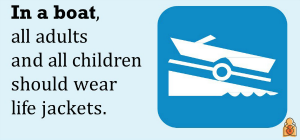 Always wear life jackets when boating. Adolescents should always wear U.S. Coast Guard-approved
life jackets whenever they are in or on boats, jet skis and other watercraft. Adults should wear theirs when boating, too, to be good role models and be ready to help in case of emergency. Make sure your teen knows never to rely on inflatable tubes, rafts or floaties as life preservers.
Always wear life jackets when boating. Adolescents should always wear U.S. Coast Guard-approved
life jackets whenever they are in or on boats, jet skis and other watercraft. Adults should wear theirs when boating, too, to be good role models and be ready to help in case of emergency. Make sure your teen knows never to rely on inflatable tubes, rafts or floaties as life preservers.
-
Stay sober on the water. Talk to your teen about how alcohol and drugs make being in or on the water more dangerous. Alcohol use while boating increases drowning risks among passengers as well as boat operators. Explain that alcohol interferes with swimming skills, balance, coordination and judgment, and can increase the risk of hypothermia in the water. Adults should also avoid alcohol while supervising children or before swimming, boating or water skiing.
-
Be aware of cold-weather water hazards. Remind your teen not to walk or ride snowmobiles on thin or thawing ice.
-
 Everyone should know how to respond to a drowning emergency. Everyone―including parents, caregivers and older children and teens―should learn CPR and safe rescue techniques to respond when there is trouble in the water. Being able to act quickly in a water emergency can make a life-saving difference. They should also know how to get help. Encourage your child's high school to provide CPR training during health class.
Remember
Hundreds of teens, including some who are good swimmers, drown each year in the U.S. But, these tragedies are preventable. Talk with your pediatrician during your teen's checkups about staying safe in and on the water.
More information