Have you ever wondered what the training and education looks like to become a pediatrician? The path is long and focused on one goal—keeping children and teens healthy.
Learn more about the process below.
Medical school & pediatrics residency
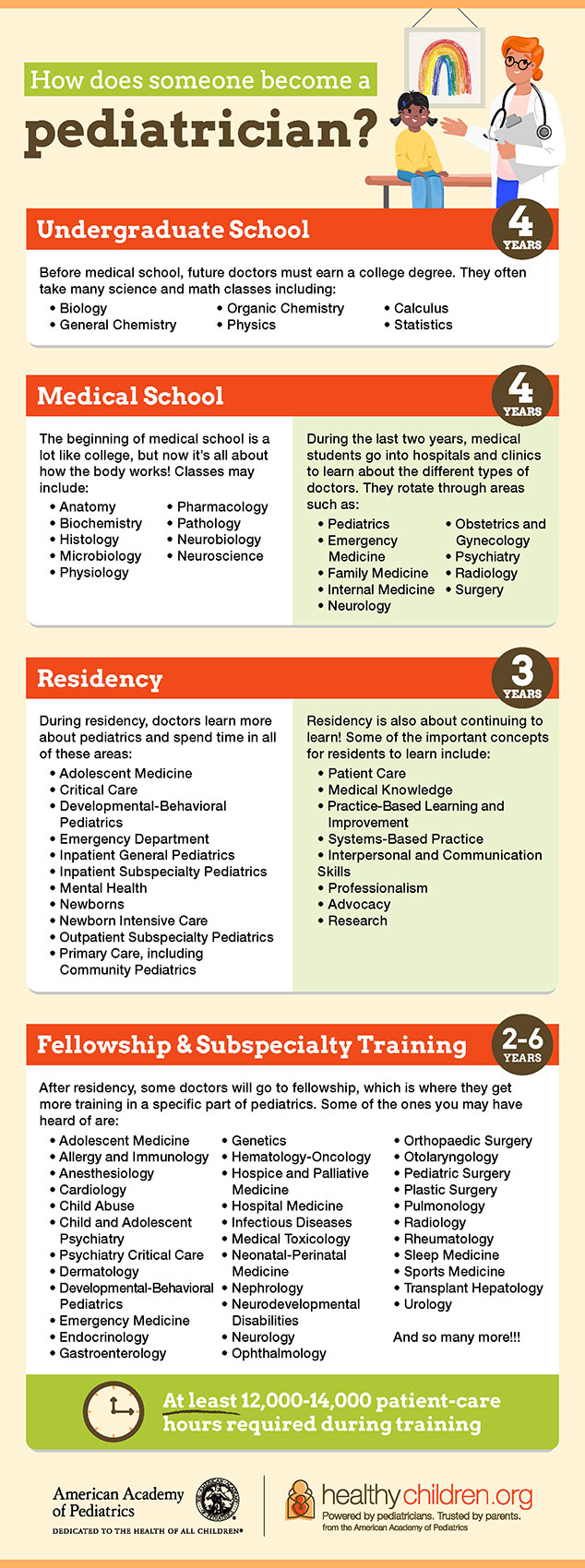
Pediatricians graduate college and then go to medical school. Following medical school, they then get specialized training in pediatrics for 3 or more years during their residency.
During residency, the pediatrician-in-training gains the knowledge and skills necessary to treat a broad range of conditions, from the mildest childhood illnesses to the most serious diseases. They spend time in general and specialty clinics, on the general pediatric floors in the hospital, emergency departments, and both the neonatal and pediatric intensive care units.
Hear from one medical student about why they decided to become a pediatrician:
Board certification in pediatrics
Pediatricians need to know a lot of information! After completing residency training, pediatricians are eligible to take a written exam given by the
American Board of Pediatrics. If they pass, they earn board certification. You might see their board certificate displayed in the office or listed on their clinic's or health system's website.
What does "FAAP" stand for?
If you see the initials "FAAP" after a pediatrician's name, it means they have passed their board exam and are now a full Fellow of the
American Academy of Pediatrics. This is the highest status of membership in this professional organization.
But the training and education does not stop once they become board-certified. Pediatricians are constantly learning and adapting to new research and clinical evidence. They participate in earning yearly educational credits and continue to have periodic assessments to test their skills.
How do pediatricians become specialists?
Following their residency, some pediatricians choose to do an extra 1 to 3 years of training in a subspecialty. These programs, called fellowships, focus on specific areas such as
neonatology (the care of sick and premature newborns) or pediatric
cardiology (the diagnosis and treatment of heart problems in children).
There are pediatric specialties for every part of the body, and sometimes there are specialists who treat a very specific disease or condition, like pediatric transplant hepatologists who take care of children that have had liver transplants.
General pediatricians often consult
pediatric subspecialists when a patient develops uncommon or special problems. If a subspecialist is needed, your primary care pediatrician will help you find the right one for your child's problem.
To learn more about a pediatrician's training, see this infographic from the American Academy of Pediatrics Section on Pediatric Trainees, below (tap for larger version):
More information