By: Dua’e Zaidi & Lisa Gelles, MD, FAAP
It is common for parents to notice darker or lighter marks on their child’s skin after a rash, irritation, or flare of a skin condition has healed. While these changes may seem worrisome to parents, they are the result of a harmless process known as post-inflammatory pigment changes. In this article, we will explain what these changes are, why they happen, and how they can be treated.
What are post-inflammatory pigment changes and how do they happen?
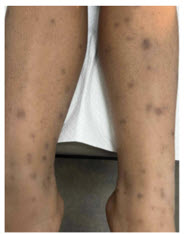 |
| Image: post-inflammatory hyperpigmentation following insect bites. |
Melanocytes are the cells of the skin responsible for producing melanin, the pigment that gives skin its color.
Inflammatory changes can affect these color-producing cells, causing skin to appear lighter, called hypopigmentation (see image at top of a baby's face after atopic dermatitis, a form of eczema) or darker, called hyperpigmentation (see image at right after insect bites, and those below after atopic dermatitis and acne), than the skin around it. These changes are often more visible in individuals with skin of color.
What can cause these post-inflammatory skin changes?
Many different types of insults or injuries to the skin can cause this inflammatory process to occur.
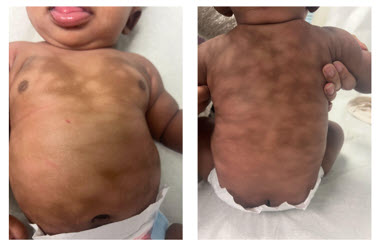 |
| Image: Post-inflammatory hyperpigmentation following atopic dermatitis on abdomen. |
Causes of darker spots on skin
Post-inflammatory hyperpigmentation commonly occurs because of acne, eczema, fungal infections or impetigo that has healed on the skin’s surfaces. Some other causes might also include rashes, bug bites, allergic reactions or conditions such as psoriasis or lichen planus. Hyperpigmentation may appear as brown, tan or blue-gray spots that persist longer than the original rash.
Causes of lighter spots on skin
Post-inflammatory hypopigmentation may also result from these causes, but can also be seen in patients with conditions such as pityriasis alba, lichen striatus, and pityriasis lichenoides chronica.
Are these skin changes harmful?
No, these skin changes are harmless. They are not a mark of damage to the skin or a sign of any serious health conditions. However, they can sometimes be distressing to children and parents.
How can these spots be treated?
Time
Spots of pigment change can often fade on their own over months to years. They can be left untreated if they are not distressing to patients and their parents.
Treating the underlying condition
Pigmentary changes can often be lessened or prevented by treating a rash as soon as you see it. For example, if eczema is promptly treated with prescription creams or over the counter moisturizers, dark or light spots can sometimes be lessened or avoided.
Sun protection
Protection from the sun is important to prevent worsening and speed up fading of post inflammatory hyperpigmentation. Sun protection can also help make post inflammatory hypopigmentation less noticeable by preventing darkening of the skin surrounding the light areas. Recommend use of a sunscreen with a sun protection factor (SPF) of 30, protective clothing, avoiding sun exposure.
Skin creams
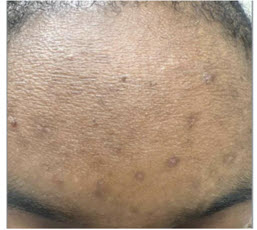 |
| Image: post-inflammatory hyperpigmentation following acne on face. |
Creams such as retinoids, azelaic acid, and hydroquinone are sometimes used to help fade the darker marks that don't go away (called persistent hyperpigmentation).
Remember
Post-inflammatory pigment changes are a harmless condition of the skin that can occur due to many different causes. Treatment of the underlying condition and protecting the skin from the sun often help these spots fade over time. However, if these spots persist or are particularly distressing for the child or family, it is a good idea to consult a dermatologist to discuss additional treatment options.
Images of post-inflammatory pigment changes courtesy of Lisa Gelles, MD, FAAP.
About Dua’e Zaidi
Dua’e Zaidi is a current medical student at Case Western Reserve University School of Medicine with an interest in Pediatric Dermatology.
About Dr. Gelles
 Lisa Gelles, MD, FAAP, is an Associate Professor of pediatrics and dermatology at Case Western Reserve University School of Medicine and the director of Pediatric Dermatology at MetroHealth Medical Center. She is a member of the Education Committee of the AAP Section on Dermatology as well as a member of the Society for Pediatric Dermatology Education Committee.