By: Liza Yusem Carstens, BA & Fiona H. Lynch, MB ,BCh, FAAP
Hidradenitis suppurativa (HS) is a chronic inflammatory skin condition that causes painful acne-like bumps in skin folds, especially the armpits, groin, genitals and buttocks.
HS can affect people of any gender or race, but is more common in females and African American or Latino individuals. Symptoms often start around puberty or during the teenage years. The condition may sometimes lead to scarring and infection, and can affect a teen's mental health and social life.
Symptoms of HS may get better or worse over time, but early diagnosis and treatment can help prevent more severe disease. Learn more below.
What are the signs and symptoms of HS?
HS causes pimples or bumps on skin that come and go. These bumps can develop anywhere on the body where there are hair follicles. During a flare of HS, these bumps grow, becoming painful. Sometimes they burst, leaking fluid or pus. When these wounds heal, they may leave permanent scars. In more severe HS, multiple lumps become connected by tunnels under the skin.
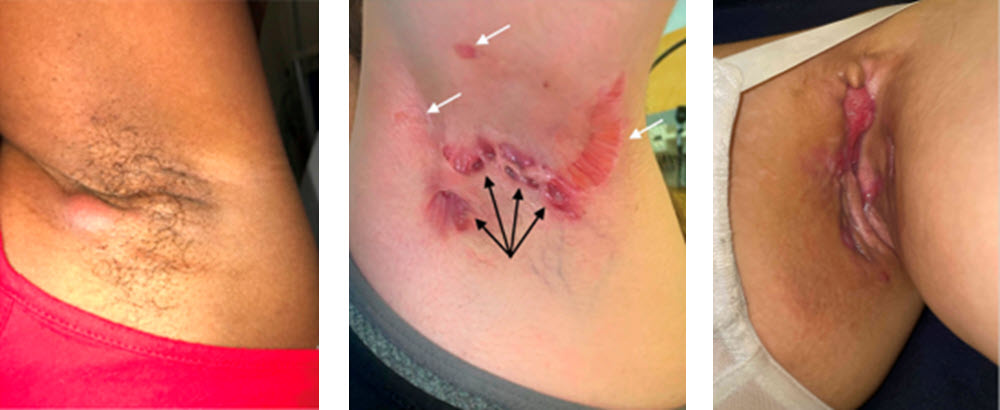 Images from left to right: A painful lump in the armpit during a flare of HS; More severe HS in the armpit with scarring and tunnels draining onto the skin; open wounds, skin tunnels and scarring in the armpit in a patient with severe HS.
What causes HS?
The cause of HS is not fully understood, but several factors increase the risk of developing the condition. Risk factors include obesity, family history of HS, diabetes, smoking, hormone changes and changes in skin bacteria. HS may also be associated with conditions, like acne, polycystic ovarian syndrome (PCOS) and inflammatory bowel disease (IBD). Your pediatrician may screen for these conditions at your child's annual check-ups.
Hidradenitis suppurativa: myth or fact?
Families often hear misinformation about HS. Here are some common myths and the facts behind them:
Myth: HS is caused by poor hygiene.
Fact: HS is not caused by poor hygiene. It develops because of a combination of genetic, hormonal, immune system, and lifestyle factors.
Myth: HS is contagious.
Fact: HS cannot spread from person to person through touch or close contact.
Myth: HS is a sexually transmitted infection (STI).
Fact: HS is not an STI and cannot be spread through sexual contact or bodily fluids.
Myth: HS is hard to diagnose.
Fact: Pediatricians and dermatologists can usually diagnose HS based on your child's symptoms and a skin examination.How is HS diagnosed?
The diagnosis is made when a pediatrician or dermatologist asks questions about your child’s symptoms and examines their skin. Laboratory testing is not useful for diagnosis.
How is HS treated?
Pain management
HS bumps can be very painful for patients. Warm compresses and pain relievers such as acetaminophen or ibuprofen are simple, effective treatments that can be tried at home.
Wound care
Do not pop the skin bumps. Warm baths and compresses can help them drain naturally. For open or draining wounds, bandages can help keep your child dry and comfortable. Bandages which absorb fluid without sticking to the wound are most useful. Examples include menstrual pads, gauze or foam dressings. Buying dressings in bulk can help reduce their cost.
Hair removal
Teens with HS should avoid shaving or waxing affected areas. Hair removal creams can cause irritation and must not be used on active areas or open skin. Laser hair removal is safe and effective as a treatment for HS. Electric hair trimming is another safe way to keep hairs short.
Treatments
HS treatments include creams, lotions and washes, medications taken by mouth, and shots. Often, a combination of different treatments is used.
Antimicrobial washes such as chlorhexidine or benzoyl peroxide can be purchased without a prescription at your local pharmacy. They should be used regularly in the shower on the skin-fold areas, to reduce bacteria on the skin. Benzoyl peroxide can bleach fabrics, so give your child an old towel or pillowcase when using this cleanser.
During flares, antibiotic lotion (clindamycin, for example) or steroid ointment (such as triamcinolone) may be applied to active spots to calm inflammation. A dermatologist may also inject steroid into a skin bump for more rapid relief.
Prevention of HS flares may require medications taken by mouth such as oral retinoids (isotretinoin, for example), antibiotics (such as doxycycline) or hormone therapies (including birth control pills).
For more severe disease, shots may be prescribed to calm down the immune system (biologic therapy). These medications may be taken for months to years. Many options are available, talk to your doctor about what is best for your child.
Surgery
With severe HS, surgery is sometimes recommended to open up the tunnels under the skin or remove the damaged skin.
How to support your child with HS
Because HS can affect private areas of skin, children may be afraid or embarrassed to speak about their symptoms. With understanding and support from parents, kids can feel comfortable talking about their HS.
School and gym attendance can be difficult during flares of HS. Make your school nurse aware of your child's wound care routine so that they can support your child. During flares, your pediatrician can provide a note to excuse your child from school or gym when necessary.
Where can my child get the care they need?
Many patients with HS visit the ER during flares, where they may undergo repeated unnecessary surgical procedures. If you think your child might have HS, ask for a referral to a dermatologist who can provide specialist care focused on preventing and managing flares in the outpatient setting.
More information
About Liza Yusem Carstens
 Liza Yusem Carstens is a medical student at the Northwestern University Feinberg School of Medicine with clinical interests in pediatric dermatology.
About Dr. Lynch
 Fiona H. Lynch, MB, BCh, is a dermatology fellow at Boston Children’s Hospital. Dr. Lynch received her medical degree from University College Dublin School of Medicine.