By: Adrienne Conza & Sarah Servattalab, MD, FAAD, FAAP
Many parents notice new spots or "moles" appearing on their child's skin as they grow, and it's natural to have questions or concerns.
Acquired melanocytic nevi (another name for moles that appear after birth) are common in childhood and are usually harmless. But knowing what’s typical, which changes matter and how to protect your child’s skin can help you feel more confident and support long‑term skin health.
In this article, we'll walk through what to know about "new" moles and how parents and health care providers can work together to keep an eye on them.
What are acquired melanocytic nevi?
Acquired melanocytic nevi are moles that develop after birth, often starting in early childhood and increasing in number through adolescence. They are made up of melanocytes, the cells that give skin its pigment.
What do these moles look like?
Acquired melanocytic nevi can be flat or raised and may range in color from light brown to dark brown to pink, red or even blue depending on the type of mole.
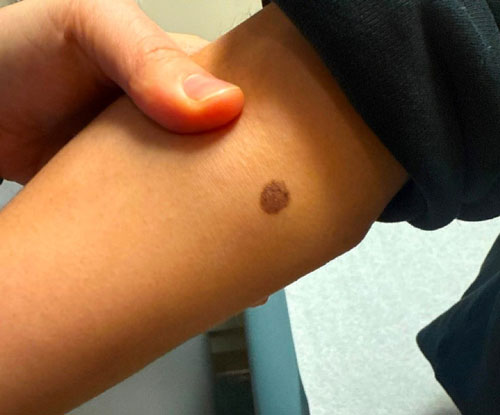
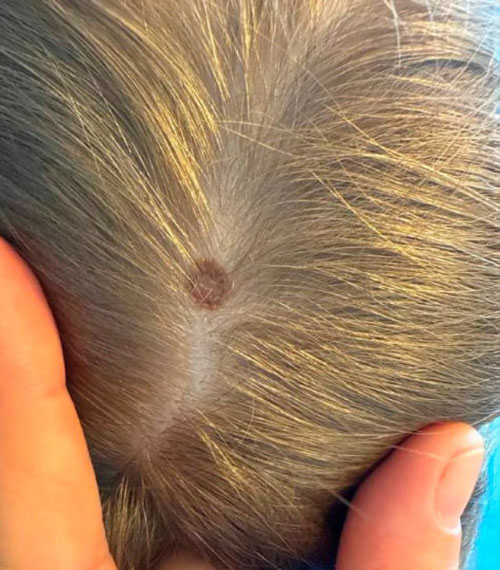
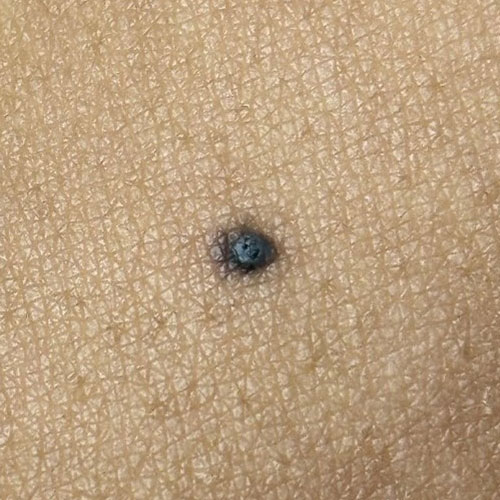
Images notes from left to right: Acquired nevus of the arm; Acquired nevus with a lighter center and darker periphery (this "eclipse" appearance is commonly seen in scalp nevi); Acquired nevi often have more pigmentation in children with darker skin tones.
Why do new moles appear as children grow?
It's normal for children to develop new moles as they get older. Genetics play a role, but sun exposure is also a major factor. Children who spend more time in the sun tend to develop more moles. Children with fair skin and who burn easily are also more likely to develop new moles. This is one reason why sun protection early in life is so important.
What do "normal" moles usually look like?
Most benign (normal) moles in children are:
Symmetric (both halves look similar)
Evenly colored
Smooth or well-defined at the edges
Stable in appearance or growing slowly as the child grows
It's also normal for moles to slowly enlarge over time as a child's body grows.
Some specific types of moles:
Some moles look different from others because of where they sit in the skin.
"Junctional" nevi are usually flat and brown, sitting at the top layer or the junction of the skin.
"Compound" nevi involve both the top and middle layers of skin, are slightly raised, often brown, and may have a mixed texture.
"Intradermal" nevi are in the middle layer of the skin (the dermis) and are typically flesh-colored or light brown and raised.
What is a halo nevus?
A halo nevus is a mole with a lighter or white ring ("halo") around it, which happens when the immune system targets the pigment in the mole. These are most common in children and teens and are usually harmless. The mole in the center may fade over time, and skin doctors typically monitor these.
What is a blue nevus?
A blue nevus is a mole that appears blue, blue-gray or dark brown because the pigment sits deeper in the skin. These are usually present in childhood and tend to stay the same over time.
What is a spitz nevus?
A spitz nevus is a type of mole commonly seen in children and teens. It often looks different from typical moles and may be pink, red or dome shaped. Some can be dark brown in color.
Spitz nevi can grow quickly at first, which is why doctors pay close attention to it. While many Spitz nevi are benign, doctors may recommend close monitoring or referral to a dermatologist.
When should parents be concerned?
While
skin cancer is rare in children, it's important to watch for changes. Parents should let their child's doctor know if a mole:
Changes rapidly in size, shape, or color
Looks very different from other moles ("the ugly duckling")
Appears irregular, with uneven color or borders
Bleeds, crusts or becomes painful or itchy without explanation
What can parents and health care providers do?
Practice sun protection: Use broad-spectrum sunscreen, encourage protective clothing and hats, and seek shade when possible.
Do regular skin checks: Parents can occasionally look over their child's skin at home, especially after baths or before bedtime.
Schedule routine checkups: Pediatricians and dermatologists can monitor moles during regular visits and decide if any need closer evaluation.
Model healthy habits: Teaching kids sun-safe behaviors early helps protect their skin for life.
Remember
Acquired melanocytic nevi (moles) are a normal part of growing up for many children, and most are completely harmless. It is important for parents to focus on sun protection and awareness.
If you ever notice a mole that concerns you or have questions, don't hesitate to talk with your child's doctor or a pediatric dermatologist for guidance and reassurance.
About Adrienne Conza
 Adrienne Conza is a medical student at UMass Chan Medical School and is currently completing a yearlong research fellowship at Boston Children’s Hospital. She values patient-centered care and education and aspires to a career in pediatric dermatology.
|
About Dr. Servattalab
 Sarah Servattalab, MD, FAAD, FAAP, is an attending dermatologist at Boston Children’s Hospital, where she has a specialized oncodermatology clinic and runs a clinical trials unit. She has triple board certification in pediatric dermatology, dermatology and pediatrics. She is co-chair of the Advocacy Sub-Committee for the American Academy of Pediatrics Section on Dermatology.
Images of acquired nevi of the arm and scalp provided by Sarah Servattalab, MD, FAAD, FAAP; deeply pigmented nevus image courtesy of Christina Boull, MD, FAAD, FAAP.
|