By: Fiona Lynch, MD & Sarah Servattalab, MD, FAAD, FAAP
Reactive Infectious Mucocutaneous Eruption (RIME) is condition that causes sores in the mouth, eyes or genital areas and sometimes skin rash. It mostly affects children and adolescents and is more common in males than females.
Symptoms of RIME start days to weeks after a respiratory infection and may last a few weeks. RIME must be diagnosed and treated by a pediatrician or dermatologist. Hospital care is sometimes needed for treatment, pain control, hydration and feeding support.
Here we answer some questions parents might have about RIME.
What causes RIME?
RIME is a reaction to an infection caused by a virus or bacteria, such as the common cold or pneumonia. The most common infection leading to RIME is by a bacteria called mycoplasma pneumoniae. When caused by this bacteria, RIME is sometimes called Mycoplasma Induced Rash and Mucositis (MIRM).
Numerous other infections, including COVID-19 or the flu, can also cause RIME. It is not yet known why some people develop RIME after these infections, and others do not.
What does RIME look like?
Patients with RIME can develop painful sores and inflammation of the mouth, eyes and genitals. The lining of the mouth, eyes and genitals are called the mucous membranes. Inflammation of these areas is called mucositis.
Some patients with RIME develop rash, which can look like small pink bumps or blisters on the skin. Rarely, RIME can cause large areas of the skin to blister and peel. The mucositis and rash typically start days to weeks after flu-like symptoms such as fever, cough or sore throat. Symptoms can last for a few weeks.
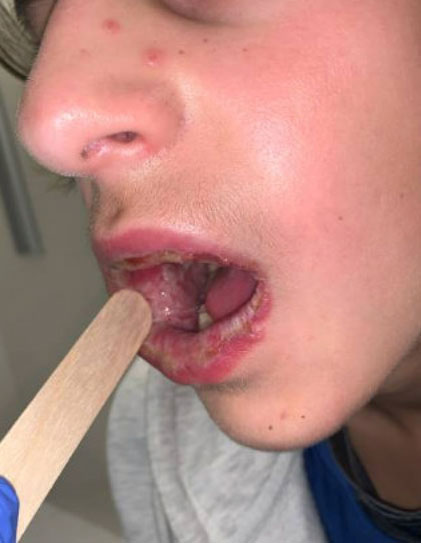
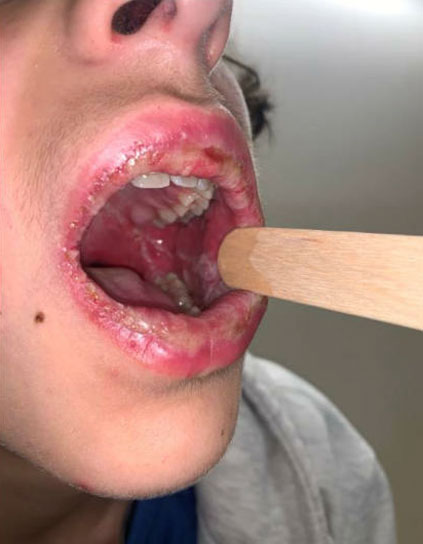
Images: a patient with RIME who has sores on the lips, inflammation of the lining of the mouth (mucositis), and small blisters on the nose.
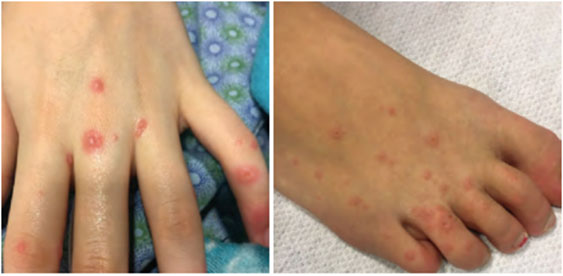
Images: small pink bumps and blisters on the hands and feet of a patient with RIME
How is RIME treated?
Thick layers of petroleum jelly-based ointment should be applied every few hours to the lips and genital area, if needed for irritation. Ointments containing medicine called corticosteroids may be applied to these areas twice a day. Mouth rinses are used to ease pain inside the mouth, and eye drops can be helpful if eyes are affected. Steroid medicines such as prednisone can be given by mouth to reduce inflammation. Pain medications such as acetaminophen or ibuprofen are often necessary.
Patients who have difficulty swallowing may be admitted to hospital in order to receive medicine and fluid through an IV line. Doctors specializing in the skin, eyes or urinary system may be called in for their input.
Is RIME contagious?
The infections that lead to RIME are contagious. However, the mucositis and rash of RIME cannot be spread from person to person.
What should I do if I suspect my child has RIME?
If you suspect your child has RIME, they should be promptly seen by their pediatrician or in an emergency department. Urgent evaluation is needed for children who have eye symptoms, are unable to eat or drink or are in severe pain. Caregivers should encourage children to drink fluids and can give pain-relieving medicines such as acetaminophen or ibuprofen.
Can RIME come back?
Most people with RIME will have just one episode. However, some children or teens can develop repeated episodes of RIME (called "recurrent RIME") with other respiratory infections. Recurrent RIME is usually milder than the first episode, and the mucositis is typically limited to the mouth.
What to expect if your child has RIME
RIME can be scary for patients and parents. Mouth sores can cause pain and difficulty eating and drinking. Eye symptoms from RIME may affect the vision, and genital sores may cause difficulty with urination.
In addition to medications to calm down the inflammation, supportive care with pain relief, hydration and nutrition are important. Thankfully, these symptoms resolve, and patients with RIME usually make a full recovery within a few weeks.
Remember
If your child develops severe sores of the mouth, eyes or genital after a cold or flu, they may have RIME. Contact your pediatrician to arrange an urgent assessment.
About Dr. Lynch
 Fiona Lynch, MD, is a pediatric dermatology fellow at Boston Children's Hospital. She has a special interest in RIME, and is Project Lead Liaison for the Drugs and Bugs committee at the Pediatric Dermatology Research Alliance.
 |
About Dr. Servattalab
 Sarah Servattalab, MD, FAAD, FAAP, is an attending dermatologist at Boston Children's Hospital, where she has a specialized oncodermatology clinic and runs a clinical trials unit. She has triple board certification in pediatric dermatology, dermatology and pediatrics. She is co-chair of the Advocacy Sub-Committee for the American Academy of Pediatrics Section on Dermatology.
|
Images of RIME sores on lips, inflammation of the lining of the mouth (mucositis) and blisters on the nose provided by Dr. Lynch.
Images of bumps and blisters on the hands and feet of a patient with RIME as they appear in Pediatric Dermatology: A Quick Reference Guide, 5th Edition (Copyright © 2025 American Academy of Pediatrics) courtesy of Sheilagh Maguiness, MD, FAAD, FAAP.