Many toddlers―curious, active and eager to explore their surroundings―are naturally attracted to water. It shines, ripples, splashes, and can even make things float! But toddlers don't understand that water can be dangerous, and aren't old enough yet to do what is needed when in trouble. That's why it's essential to protect them from water hazards where you live and where you visit.
The toddler years = higher drowning risk than any other time
Water safety is important for all ages, but especially for toddlers. Drowning is the leading cause of death in children 1-4. Young children can drown in as little as an inch or two of water, and it can happen quickly and silently.
The biggest drowning threat facing families with toddlers is unexpected, unsupervised access to water: swimming pools, hot tubs and spas, bathtubs, natural bodies of water such as ponds and standing water in or around the home. Researchers have found that 69% of drownings in children age 4 and younger happened during non-swim times, when they were not expected to be in the water.
Create layers of protection to keep your toddler safe
The American Academy of Pediatrics (AAP)
recommends using multiple
"layers" of water safety protection, since no single method can prevent all drowning. These layers work together and include barriers, supervision, water safety skills, life jackets, and being ready to respond with rescue and CPR.
During non-swim times, for example, barriers can help prevent tragedies during inevitable, brief lapses in supervision that are a normal part of every day. When children are playing in and around water, close, constant attentive and competent supervision becomes essential.
Check for water dangers at home and where you visit
Preventing unintended, unsupervised access to water is proven to be one of the most effective ways to reduce drowning deaths among young children. Start with these layers of protection in and around your
home to help make your toddler's environment safer:
Fence and secure swimming pools
Research suggests that fencing can prevent
more than half of all swimming pool drownings of young children. Swimming pools, including large, inflatable above-ground pools and other temporary pools, should be completely surrounded by a fence on all 4 sides.
The fence should:
be at least 4-feet high and have no opening under it or between slats that are more than 4 inches wide
completely separate the pool from the home and the rest of the yard
have a self-closing and self-latching gate that opens away from the pool, with the latch at least 54 inches from the ground
Keep the gate locked at all times and check it frequently to be sure it works properly. Keep toys out of the pool area when not in use so that children are not tempted to try to get through the fence during non-swim time. Also be sure to always cover and lock hot tubs, spas and whirlpools right after using them.
Remove, secure, or fence other backyard water hazards
Bird baths, fountains and ponds. Although these can be beautiful landscape features, consider holding off on installing or using them until your child is older.
Wells, irrigation or drainage ditches. Also be careful to prevent children's access to open post holes while structures like fences, decks, birdhouses and flagpoles are being put in.
Prevent your child from going outside unnoticed
Use safety gates, door locks or doorknob covers to prevent your toddler from going outside or into your garage without you knowing. Additional protections may include door alarms or ensuring the audible door alert feature on home security systems is turned on. Make sure siblings and all other family members know to always close the door behind them so younger children don't follow them out.
Empty water containers immediately after use
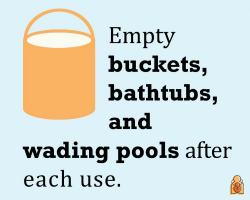
Never leave a filled, open-top water container unattended. Whenever they're not in use, be sure to completely empty any liquids in containers such as:
buckets and pails used for cleaning or painting
wading pools
coolers with melted ice
large water bowls for pets
trash cans or recycling bins that may collect rainwater
Block unsupervised access to bathrooms
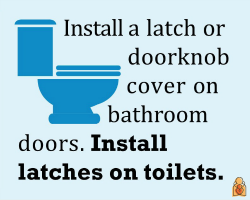
Bathrooms can be a risky place for toddlers. They can topple headfirst into toilet bowls and filled tubs, or scald themselves with water that's too hot.
Use safety latches or doorknob covers to keep bathrooms closed when they're not in use. As an added layer of protection, install latches or locks on toilet seat lids, and consider removing the bathtub drain plug when it's not in use to avoid the tub filling if a child turns on the faucet.
Provide close, constant supervision in and around water
Whenever your toddler is in or near water, give them your full attention. It's important to avoid doing anything that would make it hard to stay focused, such as using your cell phone, doing yard work or drinking alcohol or using drugs.
Use touch supervision in or near the water
The AAP recommends staying within arm's length, providing constant "touch supervision," whether it's bath time or swim time.
Most child drownings inside the home occur in bathtubs, usually during a lapse in adult supervision. The AAP recommends children not be allowed to bathe alone until they are at least 6 years old. Do not let another young sibling supervise children under this age.
During swim time, get in the water with your toddler. If you need to get out, take your child with you, even if lifeguards are present.
Assign a "water watcher"
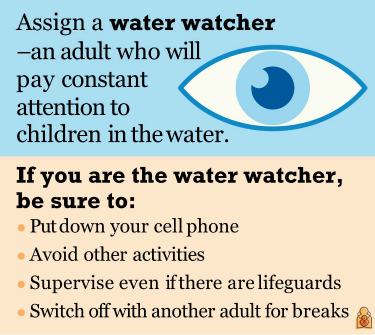 Especially during parties or picnics at the pool or lake, when it's easy to get distracted, assign a "water watcher" to constantly keep eyes on the child. Take turns, passing along a water watcher card to the next responsible adult after a set time (such as every 15-20 minutes) to stay alert and focused.
Use life jackets near lakes and rivers
Children should always wear
life jackets when in, on, or near natural bodies of water, such as lakes or rivers. Make sure they fit properly and are approved by the U.S. Coast Guard. Children and others who lack strong swim skills should also wear life jackets when at a pool or water park.
Avoid floaties, water wings or inflatable toys. These can deflate and do not prevent drowning.
Start swim lessons as soon as your child is ready
The AAP recommends swim lessons for all children, and their parents, as another layer of water safety. Children can begin swim lessons after their first birthday, depending on readiness.
Deciding when to start swim lessons should be based on a variety of individual factors. These include how often your child may be around water; your child's emotional maturity, physical and developmental abilities and limitations, their interest in learning to swim and how comfortable they are in the water.
Your pediatrician is a good resource to help know if your toddler is ready for swim lessons.
Parent-child swimming lessons
If you never learned to swim, you're not alone—and it's not too late! At least 15% of people in the U.S. say they cannot swim. This includes people from all backgrounds, but culture, race and income do play a role. For example, segregated pools and beaches kept generations of African American adults from getting quality swim lessons.
(See
video below.) And
nearly 80% of children from households earning less than $50,000 lack good swimming skills, often because their parents never learned.
Enrolling in
parent-child swim lessons is a great way to spend time with your child. Plus, your child will be safer and more confident near water if you can swim together as a family.
Be ready to respond
Know how to respond when there is trouble. Everyone, including parents, caregivers and older children, should
learn CPR and safe rescue techniques to respond to a drowning incident. Water safety is a family affair!
Remember
Always keep your toddler's safety in mind around water―at home, where your friends, relatives and caregivers live and places you stay during family trips. Prevent unsupervised access during non-swim times, provide close, constant supervision while in or around water and use multiple layers of protection.
Talk with your pediatrician at your child's checkups about guarding against common water dangers.
More information